
Oflaect 15, 30 & 60 Injection 15 mg, 20 mg, 60 mg Injection
PDF Leaflet Revision Date: 08 August 2023
Clinical Summary
Quick overview from the medicine insert
Indication
Short-term management of moderate post-operative pain.
Dosage (summary)
Adults: IM/IV 10-60 mg; max 90 mg/day (<65 years), 60 mg/day (u226565 years, renal impairment).
Onset of Action / Duration
Onset: 30 mins, Duration: 4-6 hours
Special Populations
- Elderly
- Renal impairment
Pregnancy & Breastfeeding
Contraindicated in pregnancy and lactation; may impair fertility.
Key Drug Interactions
- Increased bleeding risk with anticoagulants
- Avoid with other NSAIDs
Contraindications
- Hypersensitivity to ketorolac
- Active peptic ulcer disease
- Severe renal impairment
- Pregnancy
Common side effects
- Drowsiness
- Nausea
- Hypertension
- Gastrointestinal pain
Counselling Points
- Use lowest effective dose for shortest duration
- Monitor for signs of gastrointestinal bleeding
- Avoid alcohol
Serious warnings
- Serious gastrointestinal toxicity risk
- Anaphylactic reactions possible
Important Disclaimer
The Oflaect 15, 30 & 60 Injection 15 mg, 20 mg, 60 mg Injection professional information leaflet below is the property of Hetero Drugs South Africa and is provided on Medinsert exactly as issued, with no.. alterations or editorial changes. We make every effort to keep content current by updating documents as soon as new versions become available. Medinsert serves as a trusted access point for healthcare professionals, but does not replace official sources or clinical judgement. For more details, please read our full disclaimer. read more>>
 Healthcare Professionals Only
This content is for registered healthcare professionals
Sign in or create a free account to read the full package insert.
Free for HPCSA-registered professionals. Powered by Medinsert.
Clinical Particulars
Section 4 of the official insert — extracted exactly as issued, no alterations
4.1 Therapeutic indications
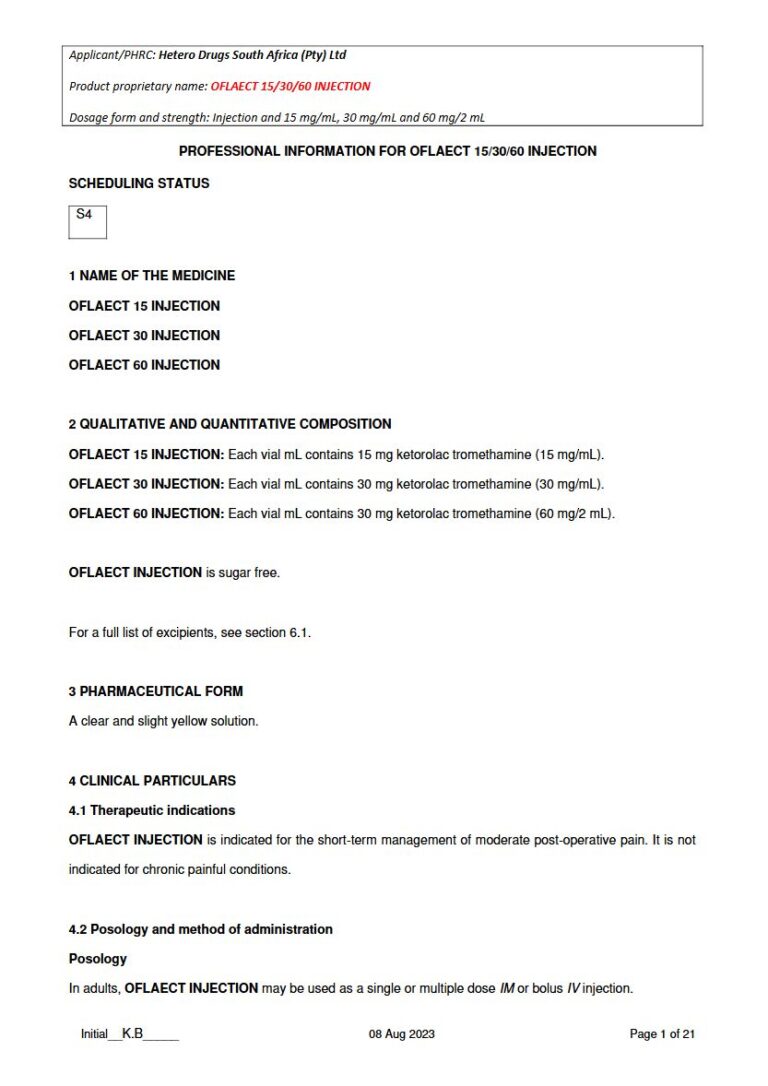
OFLAECT INJECTION is indicated for the short-term management of moderate post-operative pain. It is not indicated for chronic painful conditions.
4.2 Posology and method of administration
Posology
In adults, OFLAECT INJECTION may be used as a single or multiple dose IM or bolus IV injection. OFLAECT INJECTION may be used for short-term IV or IM use, not exceeding 2 days. The lowest effective dose should be given. Opiate analgesics (e.g. morphine, pethidine) may be used concomitantly if further pain relief is required. When used in association with OFLAECT INJECTION, the daily dose of morphine required is less than that normally required following major surgery. However, opioid side effects should still be considered, especially in day-case surgery. Hypovolaemia should be corrected prior to the administration of OFLAECT INJECTION.
a) Single dose treatment:
- IM dosing
- Patients < 65 years of age: One dose of 10 u2013 60 mg according to the severity of the pain.
- Patients u2265 65 years of age, or mildly renally impaired patients: One dose of 10 u2013 30 mg.
- IV dosing
- Patients < 65 years of age: One dose of 10 u2013 30 mg.
- Patients u2265 65 years of age, or mildly renally impaired patients: One dose of 10 u2013 15 mg.
b) Multiple-dose treatment (IV or IM): Dosage should be adjusted according to the severity of the pain and the patient response. Note that the maximum combined duration of use of multiple bolus IM or IV doses of OFLAECT INJECTION is not to exceed 2 days.
Patients < 65 years of age: The maximum daily dose should not exceed 90 mg.
- IM dosing: The recommended usual initial dose of OFLAECT INJECTION is 10 u2013 30 mg, followed by 10 u2013 30 mg every 4 u2013 6 hours as required, up to a maximum daily dose of 90 mg.
- IV dosing: IV bolus: 10 u2013 30 mg initial dose, followed by 10 u2013 30 mg every 6 hours as required, up to a maximum daily dose of 90 mg.
Patients u2265 65 years of age, or renally impaired patients: The maximum daily dose should not exceed 60 mg.
- IM dosing: The recommended dose is 10 u2013 15 mg every 4 u2013 6 hours as required up to a maximum daily dose of 60 mg.
- IV dosing: IV bolus: 10 u2013 15 mg every 6 hours as required, up to maximum daily dose of 60 mg.
Transition from OFLAECT INJECTION to ketorolac tablets: On the day of transition to the oral formulation, a total combined daily dose of all forms of ketorolac should not exceed 90 mg for patients u2264 65 years of age and 60 mg for patients > 65 years of age, renally impaired patients and patients weighing less than 50 kg. The total oral dose should not exceed 40 mg on the day the change of formulation is made.
Special populations
Elderly patients (u2265 65 years of age): Ketorolac tromethamine may be cleared more slowly by the elderly who are also more sensitive to the adverse effects of NSAIDs, therefore extra caution and reduced dosages must be used when treating the elderly (see sections 4.4 and 4.8).
Patients with renal impairment: OFLAECT INJECTION and its metabolites are eliminated primarily via the kidneys, which, in patients with reduced creatinine clearance, will result in diminished plasma clearance of the medicine. OFLAECT INJECTION is contraindicated in moderate or severe renal impairment (serum creatinine > 442 u03bcmol/ L). OFLAECT INJECTION should be used with caution in patients with lesser renal impairment (serum creatinine 170 u2013 442 u03bcmol/ L). Such patients should receive a reduced dose of OFLAECT INJECTION and their renal status should be closely monitored. It is recommended that the daily dose be reduced by half; a total daily dose of 60 mg should not be exceeded. Dialysis does not significantly clear ketorolac from the bloodstream.
Paediatric population: The use of OFLAECT INJECTION in children under 16 years of age is not recommended.
Method of administration: OFLAECT INJECTION is administered as intramuscular or bolus intravenous injection. Do not use if particulate matter is present. Bolus doses should be given over no less than 15 seconds. The IM administration should be given slowly and deeply into the muscle. The analgesic effect begins in approximately 30 minutes with maximum effect within 1 u2013 2 hours after dosing. The median duration of analgesia is generally 4 u2013 6 hours.
Pharmaceutical compatibility: OFLAECT INJECTION is compatible with normal saline, 5 % dextrose, ringeru2019s, lactated ringeru2019s or plasmalyte solutions.
4.3 Contraindications
- Patients with hypersensitivity to ketorolac tromethamine, other NSAIDs or any other component listed in section 6.1, and those patients in whom aspirin or other prostaglandin synthesis inhibitors induce allergic reactions (severe anaphylactic-like reactions have been observed in such patients). Such reactions have included asthma, rhinitis, angioedema or urticaria.
- In patients with active peptic ulcer disease, in patients with recent gastrointestinal bleeding or perforation, and in patients with a history of peptic ulcer disease or gastrointestinal bleeding.
- Patients on anti-coagulation therapy including prophylactic low-dose heparin or low molecular weight heparins or heparinoids.
- Haemorrhagic diatheses, including coagulation disorders.
- OFLAECT INJECTION inhibits platelet function and is therefore contraindicated in patients with confirmed or suspected cerebrovascular bleeding, patients who have had operations with a high risk of haemorrhage or incomplete haemostasis, and those at high risk of bleeding.
- OFLAECT INJECTION is contraindicated in patients with severe heart failure, hepatic failure and renal failure (see section 4.4).
- In patients with moderate or severe renal impairment (serum creatinine > 442 u03bc mol/ L) or in patients at risk of renal failure due to volume depletion or dehydration.
- During pregnancy, labour, delivery or lactation (see section 4.6).
- Safety and efficacy in children under 16 years of age have not been established. OFLAECT INJECTION in children is not recommended.
- As prophylactic analgesics before surgery, due to inhibition of platelet aggregation, and also intra-operatively, because of increased risk of bleeding.
- OFLAECT INJECTION is contraindicated for neuraxial (epidural or intrathecal) administration due to its alcohol content.
- The combination of OFLAECT INJECTION and oxypentifylline is contraindicated.
- OFLAECT INJECTION is contraindicated in patients currently receiving ASA or other NSAIDS (including cyclooxygenase-2 selective inhibitors).
- Concurrent treatment with ketorolac and probenecid or lithium salts is contraindicated.
- Ketorolac is contraindicated in patients with the complete or partial syndrome of nasal polyps, angioedema or bronchospasm.
4.4 Special warnings and precautions for use
Epidemiological evidence suggests that ketorolac may be associated with a high risk of serious gastrointestinal toxicity, relative to some other NSAIDs, especially when used outside the licensed indications and/or for prolonged periods (see sections 4.1, 4.2 and 4.3). Medical practitioners should be aware that in some patients pain relief may not occur until upwards of 30 minutes after IV or IM administration. The use of Ketorolac with concomitant NSAIDs including cyclooxygenase-2 selective inhibitors should be avoided. Undesirable effects may be minimized by using the lowest effective dose for the shortest duration necessary to control symptoms (see sections 4.2 and GI and cardiovascular risks below).
Gastrointestinal ulceration, bleeding and perforation: Gastrointestinal mucosal injury may occur. Serious gastrointestinal toxicity, including gastrointestinal irritation, bleeding, ulceration or perforation, can occur at any time with, or without, previous symptoms. Studies to date have not identified any subset of patients not at risk of developing peptic ulceration and bleeding. Parenterally administered OFLAECT INJECTION suggests that there may be a greater risk of gastrointestinal ulceration, bleeding and perforation in the elderly and debilitated patients. Most spontaneous reports of fatal gastrointestinal events are in this population. The incidence and severity of gastrointestinal complications increase with increasing dose and duration of treatment with OFLAECT INJECTION. The risk of clinically serious gastrointestinal bleeding is dose dependent. This is particularly true in elderly patients who receive an average daily dose greater than 60 mg/day of OFLAECT INJECTION. A history of peptic ulcer disease increases the possibility of developing serious gastrointestinal complications during OFLAECT INJECTION therapy.
Use in patients with impaired renal function: OFLAECT INJECTION should be used with caution in patients with impaired renal function or a history of kidney disease because it is a potent inhibitor of prostaglandin synthesis. In patients on renal dialysis, ketorolac clearance was reduced to approximately half the normal rate and terminal half-life increased approximately three-fold. Caution should be observed as renal toxicity has been seen with OFLAECT INJECTION and other NSAIDs in patients with conditions leading to a reduction in blood volume and/or renal blood flow where renal prostaglandins have a supportive role in the maintenance of renal perfusion. In these patients, administration of OFLAECT INJECTION or other NSAIDs may cause a dose-dependent reduction in renal prostaglandin formation and may precipitate overt renal decomposition or renal failure. Patients at greatest risk of this reaction are those with impaired renal function, hypovolaemia, heart failure, liver dysfunction, those taking diuretics and the elderly. Discontinuation of OFLAECT INJECTION or other NSAID therapy is usually followed by recovery to the pre-treatment state.
Anaphylactic reactions: Anaphylactic reactions, including, but not limited to, anaphylaxis, bronchospasm, flushing, rash, hypotension, laryngeal oedema and angioedema may occur in patients, with or without a history of hypersensitivity to aspirin, other NSAIDs or OFLAECT INJECTION. These may also occur in individuals with a history of angioedema, bronchospastic reactivity (e.g. asthma) and nasal polyps. Anaphylactoid reactions, like anaphylaxis, may have a fatal outcome. Therefore, OFLAECT INJECTION should be used with caution in patients with a history of asthma and in patients with the complete or partial syndrome of nasal polyps, angioedema and bronchospasm.
Haematological effects: OFLAECT INJECTION inhibits platelet aggregation, reduces thromboxane concentrations and prolongs bleeding time. Platelet function returns to normal within 24 to 48 hours after OFLAECT INJECTION is discontinued. The use of OFLAECT INJECTION in patients who have coagulation disorders should be undertaken very cautiously, and those patients should be carefully monitored. The concurrent use of OFLAECT INJECTION and therapy that affects haemostasis, including therapeutic doses of anticoagulation therapy (warfarin), prophylactic low dose heparin (2 500 u2013 5 000 units 12-hourly) and dextrans, may be associated with an increased risk of bleeding (see section 4.3). Increased post-operative wound haemorrhage has been reported in association with the immediate peri-operative use of OFLAECT INJECTION. Therefore, OFLAECT INJECTION should not be used in patients who have had operations with a high risk of haemorrhage or incomplete haemostasis. Caution should be used where strict haemostasis is critical, e.g. in cosmetic or day-case surgery. Haematoma and other signs of wound haemorrhage and epistaxis have been reported with the use of OFLAECT INJECTION.
Medical practitioners should be aware of the pharmacological similarity of OFLAECT INJECTION to other NSAIDs, medicines that inhibit cyclo-oxygenase and the risk of bleeding, particularly in the elderly.
Elderly patients: Elderly patients may be at a greater risk of experiencing undesirable effects than younger patients. In elderly patients the terminal plasma half-life of ketorolac is prolonged and plasma clearance may be reduced. The lower end of the dosage range is recommended.
Fluid retention and oedema: Fluid retention, hypertension and oedema have been reported with the use of OFLAECT INJECTION and it should therefore be used with caution in patients with cardiac decompensation, hypertension or similar conditions.
Hepatic effects: Elevations of one or more liver tests may occur. These abnormalities may be transient, may remain unchanged, or may progress with continued therapy. OFLAECT INJECTION should be discontinued if clinical signs and symptoms consistent with liver disease develop, or if systemic manifestations occur.
Skin reactions: Serious skin reactions, some of them fatal, including exfoliative dermatitis, Stevens-Johnson syndrome and toxic epidermal necrolysis, have been reported in association with the use of NSAIDs (see section 4.8). Patients appear to be at highest risk for these reactions early in the course of therapy: the onset of the reactions occurring in the majority of cases within the first month of treatment. Serious hypersensitivity reactions (including anaphylaxis, angioedema and drug rash with eosinophilia and systemic symptoms (DRESS), or hypersensitivity syndrome), have been reported in patients receiving cyclo-oxygenase enzyme inhibitors such as OFLAECT INJECTION, (see section 4.8). OFLAECT INJECTION should be discontinued at the first appearance of skin rash, mucosal lesions or any other sign of hypersensitivity.
SLE and mixed connective tissue disease: In patients with systemic lupus erythematosus (SLE) and mixed connective tissue disorders there may be an increased risk of aseptic meningitis (see section 4.8).
Cardiovascular and cerebrovascular effects: Appropriate monitoring and advice are required for patients with a history of hypertension and/or mild to moderate congestive heart failure as fluid retention and oedema have been reported in association with NSAID therapy. Use of coxibs and some NSAIDs (particularly at high doses) may be associated with a small increased risk of arterial thrombotic events (for example myocardial infarction or stroke). Although ketorolac has not shown to increase thrombotic events such as myocardial infarction, there are insufficient data to exclude such a risk for Ketorolac.
Patients with uncontrolled hypertension, congestive heart failure, established ischaemic heart disease, peripheral arterial disease, and/or cerebrovascular disease should only be treated with Ketorolac after careful consideration. Similar consideration should be made before initiating treatment of patients with risk factors for cardiovascular disease (e.g. hypertension, hyperlipidaemia, diabetes mellitus and smoking).
Paediatric population: Safety and efficacy in children (less than 16 years of age) have not been established. Therefore the use of OFLAECT INJECTION in children is not recommended.
Excipients with known effect: Ethanol absolute: The small amount of alcohol in this medicine will not have any noticeable effects. Sodium chloride: This medicine contains less than 1 mmol sodium (23 mg) per , that is to say essentially u2018sodium - freeu2019.
4.5 Interaction with other medicine and other forms of interaction
OFLAECT INJECTION should not be used with other NSAIDs because of the potential for additive side effects. Because of an increased tendency to bleeding when oxpentifylline is administered concurrently, this combination should be avoided (see section 4.3). Caution is advised when probenecid is administered concurrently, as alterations in the pharmacokinetics of OFLAECT INJECTION have been reported with this combination. A decreased plasma clearance and volume of distribution, increased plasma concentrations and increased half-life of ketorolac (as in OFLAECT INJECTION) have been reported. Caution is advised when methotrexate is administered concurrently, since some prostaglandin synthesis-inhibiting medicines have been reported to reduce the clearance of methotrexate, and thus possibly enhance its toxicity. Inhibition of renal lithium clearance, leading to an increase in plasma lithium concentration, has been reported with some prostaglandin synthesis-inhibiting medicines. Cases of increased lithium plasma concentrations during OFLAECT INJECTION therapy have been reported. OFLAECT INJECTION did not alter digoxin protein binding. Salicylate at concentrations of 300 u03bcg/mL and above reduces the protein binding by approximately 99,2 u2013 97,5 %, representing a potential twofold increase in unbound ketorolac (as in OFLAECT INJECTION) plasma concentrations. Therapeutic concentrations of digoxin, warfarin, ibuprofen, naproxen, piroxicam, paracetamol, phenytoin and tolbutamide did not alter OFLAECT INJECTION protein binding. OFLAECT INJECTION reduces the diuretic response to furosemide in normovolaemic healthy volunteers by approximately 20 %, so particular care should be exercised in patients with cardiac decompensation. There is an increased risk of renal impairment when OFLAECT INJECTION is administered concurrently with ACE inhibitors, particularly in volume depleted patients. OFLAECT INJECTION should not be used with other ASA or other NSAIDs including cyclooxygenase-2 selective inhibitors as the risk of inducing serious NSAID related adverse events may be increased (see section 4.3). Ketorolac inhibits platelet aggregation, reduces thromboxane concentrations and prolongs bleeding time. Unlike the prolonged effects from aspirin, platelet function returns to normal within 24-48 hours after ketorolac is discontinued. OFLAECT INJECTION is contraindicated in combination with anti-coagulants, such as warfarin since co-administration of NSAIDs and anti-coagulants may cause an enhanced anti-coagulant effect (see section 4.3). NSAIDs should not be used for eight to twelve days after mifepristone administration as NSAIDs can reduce the effects of mifepristone. Caution should be taken when co-administering with corticosteroids because of the increased risk of gastrointestinal ulceration or bleeding (see section 4.4). There is an increased risk of gastrointestinal bleeding (see section 4.4) when anti-platelet agents and selective serotonin reuptake inhibitors (SSRIs) are combined with NSAIDs. Co-administration with diuretics can lead to a reduced diuretic effect, and increase the risk of nephrotoxicity of NSAIDs. Caution is advised when ciclosporin is co-administered because of the increased risk of nephrotoxicity. There is a possible risk of nephrotoxicity when NSAIDs are given with tacrolimus. NSAIDs may reduce the effect of diuretics and antihypertensive medicinal products. The risk of acute renal insufficiency, which is usually reversible, may be increased in some patients with compromised renal function (e.g. dehydrated patients or elderly patients) when ACE inhibitors and/or angiotensin II receptor antagonists are combined with NSAIDs. Therefore, the combination should be administered with caution, especially in the elderly. Patients should be adequately titrated and consideration should be given to monitoring renal function after initiation of concomitant therapy, and periodically thereafter. NSAIDs may exacerbate cardiac failure, reduce GFR and increase plasma cardiac glycoside levels when co-administered with cardiac glycosides. Ketorolac has been shown to reduce the need for concomitant opioid analgesia when it is given for the relief of postoperative pain. Animal data indicate that NSAIDs can increase the risk of convulsions associated with quinolone antibiotics. Patients taking NSAIDs and quinolones may have an increased risk of developing convulsions. NSAIDs given with zidovudine increase the risk of haematological toxicity. There is evidence of an increased risk of haemarthroses and haematoma in HIV (+) haemophiliacs receiving concurrent treatment with zidovudine and ibuprofen. Abuse and dependence: OFLAECT INJECTION is devoid of addictive potential. No withdrawal symptoms have been observed following abrupt discontinuation of OFLAECT INJECTION.
4.6 Fertility, pregnancy and lactation
Pregnancy: OFLAECT INJECTION is contraindicated during pregnancy and lactation (see section 4.3).
First trimester: Inhibition of prostaglandin synthesis may adversely affect the pregnancy and/or the embryo/foetal development. Data from epidemiological studies raise concern about an increased risk of miscarriage and of cardiac malformation and gastroschisis after use of a prostaglandin synthesis inhibitor in early pregnancy. The absolute risk for cardiovascular malformation was increased from less than 1 %, up to approximately 1,5 %. In animals, administration of a prostaglandin synthesis inhibitor has been shown to result in increased pre- and post-implantation loss and embryo-foetal lethality. In addition, increased incidences of various malformations including cardiovascular, have been reported in animals given a prostaglandin synthesis inhibitor during the organogenetic period.
Second and Third trimester: During the third trimester of pregnancy, prostaglandin synthesis inhibitors may expose the foetus to: cardiopulmonary toxicity (with premature closure of the ductus arteriosus and pulmonary hypertension); renal dysfunction, which may progress to renal failure with oligo-hydroamniosis.
Breastfeeding: Ketorolac crosses the placenta and has been detected in human milk at low concentrations.
Fertility: The use of OFLAECT INJECTION, as with any medicine known to inhibit cyclooxygenase/prostaglandin synthesis, may impair fertility and is not recommended in women attempting to conceive. In women who have difficulty conceiving or are undergoing investigation of fertility, withdrawal of OFLAECT INJECTION should be considered.
4.7 Effects on ability to drive and use machines
Patients may experience drowsiness, dizziness, vertigo, insomnia or depression with the use of OFLAECT INJECTION. If patients experience these, or other similar undesirable effects, they should exercise caution in carrying out activities that require alertness.
4.8 Undesirable effects
b) Tabulated list of adverse reactions
Blood and lymphatic system disorders
- Frequent: Purpura.
- Less frequent: Thrombocytopenia, post-operative wound haemorrhage, epistaxis.
- Frequency unknown: Haematoma, increased bleeding time.
Metabolism and nutrition disorders
- Less frequent: Excessive thirst.
Psychiatric disorders
- Less frequent: Depression, hallucinations, psychotic reactions.
- Frequency unknown: Nervousness, abnormal thinking, euphoria, inability to concentrate, insomnia, abnormal dreams, anxiety.
Nervous system disorders
- Frequent: Drowsiness, dizziness, headache, sweating.
- Less frequent: Hyperkinesia, convulsions, aseptic meningitis.
- Frequency unknown: Paraesthesia, vertigo.
Eye disorders
- Less frequent: Abnormal vision.
Ear and labyrinth disorders
- Less frequent: Tinnitus, hearing loss.
Cardiac disorders
- Frequency unknown: Bradycardia, palpitations, chest pain.
Vascular disorders
- Frequent: Hypertension.
- Less frequent: Hypotension.
- Frequency unknown: Flushing, pallor.
Respiratory, thoracic and mediastinal disorders
- Less frequent: Dyspnoea, asthma, pulmonary oedema.
Gastrointestinal disorders
- Frequent: Nausea, dyspepsia, gastrointestinal pain, abdominal discomfort, diarrhoea, constipation, flatulence, fullness, stomatitis, vomiting.
- Less frequent: Melaena, peptic ulcer, rectal bleeding, haemorrhage, perforation, pancreatitis.
- Frequency unknown: Dry mouth, gastritis, eructation, esophagitis, abnormal taste.
Hepato-biliary disorders
- Less frequent: Hepatitis, cholestatic jaundice.
- Frequency unknown: Abnormal liver function tests, liver failure.
Skin and subcutaneous tissue disorders
- Less frequent: Pruritus, urticaria, Lyell's syndrome, Stevens-Johnson syndrome, exfoliative dermatitis, maculopapular rash.
Musculoskeletal and connective tissue disorders
- Frequency unknown: Myalgia.
Renal and urinary disorders
- Less frequent: Increased urinary frequency, oliguria, acute renal failure, haemolytic uraemic syndrome, flank pain (with or without haematuria), interstitial nephritis. Signs of renal impairment, such as, but not limited to, elevations of creatinine and potassium, can occur after one dose of OFLAECT INJECTION.
- Frequency unknown: Hyponatraemia, hyperkalaemia, raised serum urea and creatinine, urinary retention, nephrotic syndrome.
General disorders and administration site conditions
- Frequent: Oedema, weight gain, injection site reactions.
- Less frequent: Fever.
- Frequency unknown: Asthenia.
POST MARKETING
Blood and lymphatic system disorders: Neutropenia, agranulocytosis, aplastic anaemia and haemolytic anaemia.
Immune system disorders: anaphylaxis, anaphylactoid reactions, anaphylactoid reactions like anaphylaxis, may have a fatal outcome, hypersensitivity reactions such as bronchospasm flushing, rash, hypotension, laryngeal oedema. These may also occur in individuals with a history of angioedema, bronchospastic reactivity (e.g. asthma and nasal polyps).
Metabolism and nutrition disorders: anorexia.
Psychiatric disorders: Confusion and stimulation have been observed.
Eye Disorders: visual disturbances, optic neuritis.
Ear Disorders: vertigo.
Cardiac Disorders: cardiac failure.
Vascular disorders: haematoma, postoperative wound haemorrhage.
Reproductive System and Breast Disorders: female infertility.
Respiratory, Thoracic and Mediastinal Disorders: epistaxis.
Gastro-intestinal disorders: ulcers, sometimes fatal, haematemesis, ulcerative stomatitis, gastrointestinal ulceration, exacerbation of colitis and Crohn's disease.
Infection: meningitis aseptic. (especially in patients with existing auto-immune disorders, such as systemic lupus erythematosus, mixed connective tissue disease), with symptoms such as stiff neck, headache, nausea, vomiting, fever or disorientation.
Skin and Subcutaneous Tissue Disorders: angioedema, sweating, toxic epidermal necrolysis (very rare). Additionally erythema multiforme and skin photosensitivity.
Musculoskeletal and Connective Tissue Disorders: functional disorder.
General Disorders and Administration Site Condition: excessive thirst, and pain, chest pain. Additionally, malaise, fatigue has been observed.
Reporting of suspected adverse reactions: Reporting suspected adverse reactions after authorisation of the medicine is important. It allows continued monitoring of the benefit/risk balance of the medicine. Health care providers are asked to report any suspected adverse reactions via the u201c6.04 Adverse Drug Reactions Reporting Formu201d, found online under SAHPRAu2019s publications: https://www.sahpra.org.za or to the Holder of certificate of registration through the mail: [email protected]
4.9 Overdose
Doses of 360 mg given intramuscularly over an 8-hour interval for five consecutive days have caused abdominal pain, nausea, vomiting, hyperventilation, erosive gastritis, renal dysfunction and peptic ulcers which have healed after discontinuation of dosing. OFLAECT INJECTION is not appreciably cleared by dialysis.
