
Adco-Zidovudine Syrup
Clinical Summary
Quick overview from the medicine insert
Indication
Treatment of HIV infection in combination with other antiretroviral agents.
Dosage (summary)
The usual adult dose is 300 mg/day, administered as 150 mg twice daily or 200 mg three times daily. For children, the dosage is based on body weight.
Onset of Action / Duration
Onset of action is typically within 1-2 weeks, with maximum effect observed after several weeks of therapy.
Special Populations
- Renal impairment
- Hepatic impairment
- Elderly patients
Pregnancy & Breastfeeding
Zidovudine is classified as Category C. It is recommended for use during pregnancy to reduce the risk of HIV transmission from mother to child. Caution is advised during lactation as it is excreted in breast milk.
Key Drug Interactions
- Bone marrow suppressants may increase the risk of hematologic toxicity.
- Ribavirin may increase the risk of anemia when used concurrently.
- Other antiretroviral agents may have additive effects.
Contraindications
- Hypersensitivity to zidovudine or any component of the formulation.
- Severe hepatic impairment.
Common side effects
- Anemia
- Neutropenia
- Nausea
- Headache
- Fatigue
- Myopathy
Counselling Points
- Advise patients to take the medication exactly as prescribed.
- Inform patients about the importance of adherence to therapy.
- Discuss potential side effects and the need for regular blood tests to monitor blood counts.
- Encourage patients to report any signs of infection or unusual bleeding.
Serious warnings
- Monitor for signs of hematologic toxicity, especially in patients with pre-existing conditions.
- Use with caution in patients with a history of liver disease.
- Patients should be advised to avoid alcohol as it may exacerbate side effects.
Important Disclaimer
The Adco-Zidovudine Syrup professional information leaflet below is the property of Adcock Ingram and is provided on Medinsert exactly as issued, with no.. alterations or editorial changes. We make every effort to keep content current by updating documents as soon as new versions become available. Medinsert serves as a trusted access point for healthcare professionals, but does not replace official sources or clinical judgement. For more details, please read our full disclaimer. read more>>
 Healthcare Professionals Only
This content is for registered healthcare professionals
Sign in or create a free account to read the full package insert.
Free for HPCSA-registered professionals. Powered by Medinsert.
Clinical Particulars
Section 4 of the official insert — extracted exactly as issued, no alterations
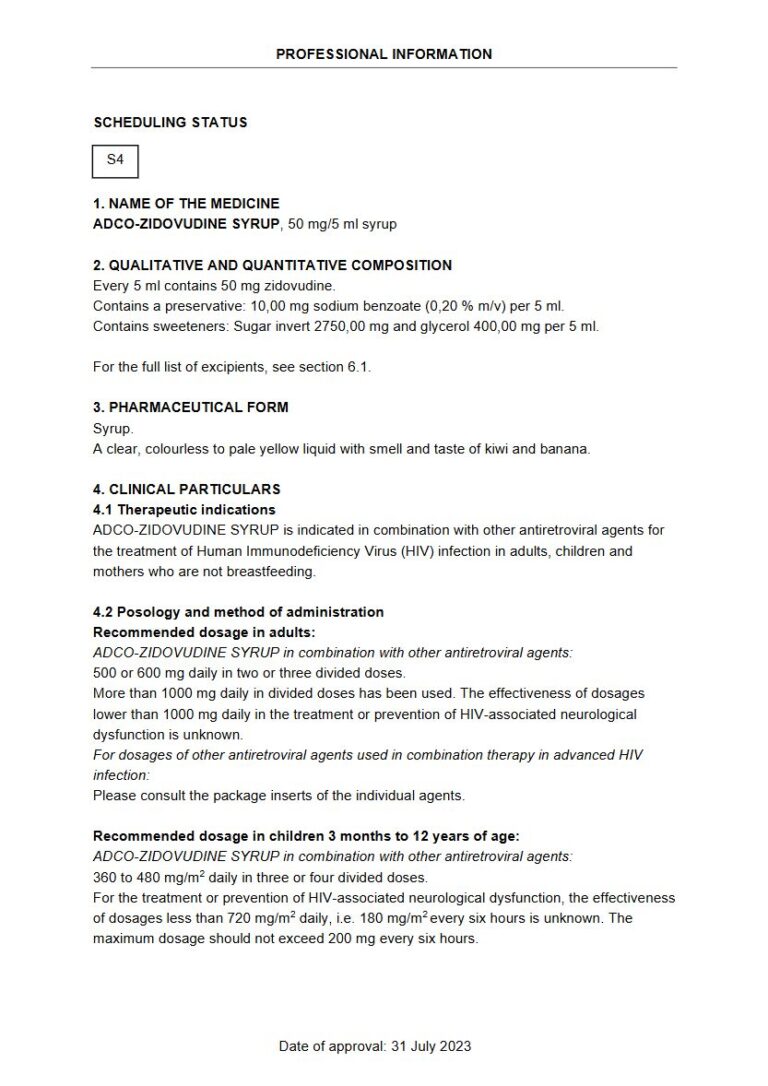
4.1 Therapeutic indications
ADCO-ZIDOVUDINE SYRUP is indicated in combination with other antiretroviral agents for the treatment of Human Immunodeficiency Virus (HIV) infection in adults, children and mothers who are not breastfeeding.
4.2 Posology and method of administration
Recommended dosage in adults: ADCO-ZIDOVUDINE SYRUP in combination with other antiretroviral agents: 500 or 600 mg daily in two or three divided doses. More than 1000 mg daily in divided doses has been used. The effectiveness of dosages lower than 1000 mg daily in the treatment or prevention of HIV-associated neurological dysfunction is unknown.
For dosages of other antiretroviral agents used in combination therapy in advanced HIV infection: Please consult the package inserts of the individual agents.
Recommended dosage in children 3 months to 12 years of age: ADCO-ZIDOVUDINE SYRUP in combination with other antiretroviral agents: 360 to 480 mg/m2 daily in three or four divided doses. For the treatment or prevention of HIV-associated neurological dysfunction, the effectiveness of dosages less than 720 mg/m2 daily, i.e. 180 mg/m2 every six hours is unknown. The maximum dosage should not exceed 200 mg every six hours.
Recommended dosage in the prevention of mother-to-foetus transmission: Pregnant women over 14 weeks of gestation: 500 mg orally per day i.e. 100 mg five times per day, until the beginning of labour. During labour and delivery, zidovudine should be administered intravenously at 2 mg/kg body mass over 1 hour, followed by a continuous intravenous infusion at 1 mg/kg per hour until the umbilical cord is clamped. Newborn infants u2013 starting within 12 hours after birth until 6 weeks of age: 2 mg/kg body mass orally every 6 hours. Infants unable to receive oral dosing should be given zidovudine intravenously at 1,5 mg/kg body mass, infused over 30 minutes every 6 hours.
Dosage adjustments in patients with haematological toxicity: Dosage reduction or interruption of ADCO-ZIDOVUDINE SYRUP therapy may be necessary in patients whose haemoglobin level falls to between 7,5 g/dl (4,65 mmol/L) and 9 g/dl (5,59 mmol/L) or whose neutrophil count falls to between 0,75 x 10⁹/L and 1,0 x 10⁹/L.
Dosage adjustments of ADCO-ZIDOVUDINE SYRUP in combination with other antiretroviral medicines: Dosage adjustments for each medicine should follow the dosing guidelines for the individual medicine. For severe adverse events, where the causative agent is unclear, or those persisting after dose interruption or reduction of one medicine, the other medicine should also be interrupted or dose reduced. The medical practitioner should refer to the package insert of the other antiretroviral medicines for a description of known adverse reactions.
Special populations: Dosage in the elderly: Zidovudine pharmacokinetics have not been studied in patients over 65 years of age and no specific data are available. Due to age-associated changes such as the decrease in renal function and alterations in haematological parameters in this age group, special care is advised with the use of ADCO-ZIDOVUDINE SYRUP. Appropriate monitoring of these patients before and during ADCO-ZIDOVUDINE SYRUP therapy is advised.
Dosage in renal impairment: Patients with advanced renal failure have a 50 % higher maximum plasma concentration of zidovudine compared to healthy individuals. Systemic exposure to zidovudine (measured as the area under the time-concentration curve) is increased 100 %; the half-life is not significantly altered. There is substantial accumulation of the major glucuronide metabolite in renal failure, but this does not appear to cause toxicity. In patients with severe renal impairment on peritoneal or haemodialysis, daily dosages of 300 mg to 400 mg in 3 to 4 divided dosages should be appropriate. Haematological parameters and clinical response may influence the need for subsequent dosage adjustment. Haemodialysis and peritoneal dialysis have no significant effect on the elimination of zidovudine but enhance the elimination of the glucuronide metabolite.
Dosage in hepatic impairment: There are only limited data available therefore precise dosage recommendations cannot be made, but dosage adjustments may be necessary. Data in patients with cirrhosis suggest that accumulation of zidovudine may occur in patients with hepatic impairment because of decreased glucuronidation. Medical practitioners will need to monitor for signs of intolerance and adjust the dose and/or increase the interval between doses as appropriate.
4.3 Contraindications
- Hypersensitivity to any of the ingredients (see section 2 and 6.1).
- Abnormally low neutrophil cell counts (less than 0,75 x 10⁹/L).
- Abnormally low haemoglobin levels (less than 7,5 g/decilitre or 4,65 mmol/L).
- Co-administration with stavudine (d4T) and ribavirin (see section 4.5).
- Breastfeeding.
- The safety of ADCO-ZIDOVUDINE SYRUP for the mother and foetus during the first trimester of pregnancy has not been established.
- ADCO-ZIDOVUDINE SYRUP is contraindicated in new born infants with hyperbilirubinaemia requiring treatment other than phototherapy, or with increased transaminase levels of over five times the upper limit of normal.
4.4 Special warnings and precautions for use
Patients should be warned about the concomitant use of self-administered medicines (see section 4.5). The concomitant use of rifampicin or stavudine with zidovudine should be avoided (see section 4.5). Pregnant women considering the use of ADCO-ZIDOVUDINE SYRUP during pregnancy for prevention of HIV transmission to their infants should be advised that transmission might still occur despite therapy. ADCO-ZIDOVUDINE SYRUP is not a cure for HIV infection and patients remain at risk of developing illnesses associated with immune suppression, including opportunistic infections and neoplasms. In patients with early HIV disease on long-term treatment, the risk of lymphoma development is unknown as data on the development of neoplasms, including lymphomas are limited. Patients receiving combination therapy may also continue to develop opportunistic infections and other complications of HIV infection, and therefore should remain under close observation by medical practitioners experienced in the treatment of patients with HIV-associated diseases.
Lipodystrophy and metabolic abnormalities: Combination antiretroviral therapy has been associated with the redistribution/accumulation of body fat, including central obesity, dorso-cervical fat, enlargement (buffalo hump), peripheral wasting, facial wasting, breast enlargement, and elevated serum lipid and glucose levels in HIV patients. Clinical examination should include evaluation for physical signs of fat redistribution. Patients with evidence of lipodystrophy should have a thorough cardiovascular risk assessment.
Immune Reconstitution Inflammatory Syndrome: Immune reconstitution inflammatory syndrome (IRIS) is an immunopathological response resulting from the rapid restoration of pathogen-specific immune responses to pre-existing antigens combined with immune dysregulation, which occurs shortly after starting combination Anti-Retroviral Therapy (cART). Typically, such reaction presents by paradoxical deterioration of opportunistic infections being treated or with unmasking of an asymptomatic opportunistic disease, often with an atypical inflammatory presentation. IRIS usually develops within the first three months of initiation of ART and occurs more commonly in patients with low CD4 counts. Common examples of IRIS reactions to opportunistic diseases are tuberculosis, cytomegalovirus retinitis, and cryptococcal meningitis. Appropriate treatment of the opportunistic disease should be instituted or continued and ART continued. Inflammatory manifestations generally subside after a few weeks. Severe cases may respond to glucocorticoids, but there is only limited evidence for this in patients with tuberculosis IRIS. Autoimmune disorders (such as Graves' disease) have also been reported as IRIS reactions; however, the reported time to onset is more variable and these events can occur many months after initiation of treatment.
Osteonecrosis: Although the aetiology is considered to be multifactorial (including corticosteroid use, alcohol consumption, severe immunosuppression, higher body mass index), cases of osteonecrosis have been reported, particularly in patients with advanced HIV-disease and/or long-term exposure to combination antiretroviral therapy (cART). Patients should be advised to seek medical advice if they experience joint aches and pain, joint stiffness or difficulty in movement.
Opportunistic infections: Patients receiving ADCO-ZIDOVUDINE SYRUP should be advised that they may continue to develop opportunistic infections and other complications of HIV infection, and therefore they should remain under close observation by healthcare professionals experienced in the treatment of patients with associated HIV disease. Regular monitoring of viral load and CD4 counts needs to be done.
The risk of HIV transmission to others: Patients should be advised that current antiretroviral therapy, including ADCO-ZIDOVUDINE SYRUP, does not prevent the risk of transmission of HIV to others through sexual contact or blood contamination. Appropriate precautions should continue to be employed.
Haematological toxicity: Anaemia (usually not observed before six weeks of ADCO-ZIDOVUDINE SYRUP therapy but occasionally occurring earlier), neutropenia (usually not observed before four weeks' therapy but sometimes occurring earlier) and leucopenia (usually secondary to neutropenia) can be expected to occur in patients receiving ADCO-ZIDOVUDINE SYRUP; These occurred more frequently at higher dosages (1 200-1 500 mg/day) and in patients with poor bone marrow reserve prior to treatment, particularly with advanced HIV disease (see section 4.8). Haematological parameters should be carefully monitored. It is recommended that blood tests be performed at least every two weeks for the first three months of therapy and at least once a month thereafter for patients with advanced symptomatic HIV disease. Haematological toxicity is less frequent in patients with early HIV disease, where bone marrow reserve is generally good. Depending on the overall condition of the patient, blood tests may be performed less often, for example every one to three months. If the haemoglobin level falls to between 7,5 g/dl (4,65 mmol/L) and 9 g/dl (5,59 mmol/L) or the neutrophil count falls to between 0,75 x 10⁹/L and 1,0 x 10⁹/L, the daily dosage may be reduced until there is evidence of marrow recovery. Alternatively, recovery may be enhanced by a brief 2 to 4 weeks interruption of ADCO-ZIDOVUDINE SYRUP therapy. Marrow recovery is usually observed within 2 weeks after which time ADCO-ZIDOVUDINE SYRUP therapy may be restarted at a reduced dose. Dosage adjustments do not necessarily eliminate the need for transfusions in patients with significant anaemia (see section 4.8).
Lactic acidosis / hyperlactataemia: Use of ADCO-ZIDOVUDINE SYRUP can result in potentially fatal lactic acidosis as a consequence of mitochondrial dysfunction. Clinical features are non-specific, and include nausea, vomiting, abdominal pain, dyspnoea, fatigue and weight loss. In patients with suspicious symptoms or biochemistry, measure the venous lactate level (normal < 2 mmol/u2113) and the serum bicarbonate and respond as follows:
- Lactate 2-5 mmol/u2113 with minimum symptoms: switch to agents that are less likely to cause lactic acidosis.
- Lactate 5-10 mmol/u2113 with symptoms and/or with reduced standard bicarbonate: Stop NRTIs and change treatment option. Once lactate has settled, use medicines that are less likely to cause lactic acidosis. Exclude other causes, (e.g. sepsis, uraemia, diabetic ketoacidosis, thyrotoxicosis and hyperthyroidism.
- Lactate > 10 mmol/u2113: STOP all therapy (80 % mortality).
The above lactate values may not be applicable to paediatric patients. Caution should be exercised when administering ADCO-ZIDOVUDINE SYRUP to patients with known risk factors for liver disease. Treatment with ADCO-ZIDOVUDINE SYRUP should be suspended in any patient who develops clinical or laboratory findings suggestive of lactic acidosis or hepatotoxicity.
Mitochondrial dysfunction: Nucleoside and nucleotide analogues have been demonstrated in vitro and in vivo to cause a variable degree of mitochondrial damage. There have been reports of mitochondrial dysfunction in HIV negative infants exposed in utero and/or post-natally to nucleoside analogues. Apart from lactic acidosis/hyperlactataemia (see above) other manifestations of mitochondrial dysfunction include haematological disorders (anaemia, neutropenia), and peripheral neuropathy. Some late-onset neurological disorders have been reported (hypertonia, convulsion, abnormal behaviour). It is not known whether the neurological disorders are transient or permanent. Any foetus exposed in utero to nucleoside and nucleotide analogues, even HIV negative infants/children, should have clinical and laboratory follow-up and should be fully investigated for possible mitochondrial dysfunction in case of relevant sign and symptoms.
Pancreatitis: Pancreatitis has been observed in some patients receiving ADCO-ZIDOVUDINE SYRUP. Pancreatitis must be considered whenever a patient develops abdominal pain, nausea, vomiting or elevated biochemical markers. Discontinue use of ADCO-ZIDOVUDINE SYRUP until diagnosis of pancreatitis is excluded.
Patients with moderate to severe renal impairment: In patients with moderate to severe renal impairment, the terminal half-life of ADCO-ZIDOVUDINE SYRUP is increased due to decreased clearance. The dose of ADCO-ZIDOVUDINE SYRUP should therefore be adjusted (see section 4.2).
Liver disease: Use of ADCO-ZIDOVUDINE SYRUP can result in hepatomegaly due to non-alcoholic fatty liver disease (hepatic steatosis). The safety and efficacy of ADCO-ZIDOVUDINE SYRUP has not been established in patients with significant underlying liver disorders/diseases. In case of concomitant antiviral therapy for hepatitis B or C, please also consult the relevant package inserts for these medicines. Patients with pre-existing liver dysfunction including chronic active hepatitis have an increased frequency of liver function abnormalities during combination antiretroviral therapy and should be monitored. If there is evidence of worsening liver disease in such patients, temporary or permanent discontinuation of treatment must be considered.
Zidovudine clearance in patients with mild hepatic impairment without cirrhosis [Child-Pugh scores of 5-6] is similar to that seen in healthy subjects, therefore no zidovudine dose adjustment is required. In patients with moderate to severe liver disease [Child-Pugh scores of 7-15], specific dosage recommendations cannot be made due to the large variability in zidovudine exposure observed, therefore zidovudine use in this group of patients is not recommended.
Patients with HIV and hepatitis B or C virus co-infection: Patients with chronic hepatitis B or C and treated with antiretroviral therapy are at an increased risk for severe and potentially fatal hepatic adverse reactions. Medical practitioners should refer to current HIV treatment guidelines for the optimal management of HIV infection in patients co-infected with hepatitis B virus (HBV). In case of concomitant antiviral therapy for hepatitis B or C, please refer also to the relevant package inserts for these medicines. Patients co-infected with HIV and HBV who discontinue ADCO-ZIDOVUDINE SYRUP should be closely monitored with both clinical and laboratory follow-up after stopping treatment. In patients with advanced liver disease or cirrhosis, treatment discontinuation is not recommended since post-treatment exacerbation of hepatitis may lead to hepatic decompensation.
Lipoatrophy: Treatment with zidovudine has been associated with loss of subcutaneous fat, which has been linked to mitochondrial toxicity. The incidence and severity of lipoatrophy are related to cumulative exposure. This fat loss, which is most evident in the face, limbs and buttocks, may not be reversible when switching to a zidovudine-free regimen. Patients should be regularly assessed for signs of lipoatrophy during therapy with zidovudine and zidovudine-containing products. Therapy should be switched to an alternative regimen if there is suspicion of lipoatrophy development.
Weight and metabolic parameters: An increase in weight and in levels of blood lipids and glucose may occur during antiretroviral therapy. Such changes may in part be linked to disease control and life style. For lipids, there is in some cases evidence for a treatment effect, while for weight gain there is no strong evidence relating this to any particular treatment. For monitoring of blood lipids and glucose reference is made to established HIV treatment guidelines. Lipid disorders should be managed as clinically appropriate.
Patients co-infected with hepatitis C virus: The concomitant use of ribavirin with zidovudine is not recommended due to an increased risk of anaemia (see section 4.5).
Use in Elderly and in Patients with Renal or Hepatic Impairment: See section 4.2.
Prevention of mother-to-foetus transmission: The long-term consequences of in utero and infant exposure to ADCO-ZIDOVUDINE SYRUP are unknown. Low haemoglobin concentrations have been reported in infants exposed to zidovudine for this indication, but transfusion was not required. Anaemia resolved within 6 weeks after completion of zidovudine therapy.
Lactation: To avoid the transmission of HIV to their infants, women infected with HIV should not breastfeed.
Excipients: Sodium benzoate: Increase in bilirubinaemia following its displacement from albumin may increase neonatal jaundice which may develop into kernicterus (non-conjugated bilirubin deposits on the brain tissue). Sodium: This medicine contains less than 1 mmol sodium (23 mg) per dosage unit (5 ml), that is to say essentially' sodium-free'. Sugar invert: Patients with rare hereditary problems of fructose intolerance or glucose-galactose malabsorption should not take this medicine. This medicine contains 2750,00 mg of invert sugar per 5 ml. This should be taken into account in patients with diabetes mellitus. May be harmful to the teeth.
4.5 Interaction with other medicines and other forms of interaction
As zidovudine is primarily eliminated by hepatic conjugation to its inactive glucuronidated metabolite, medicines that are primarily eliminated by hepatic metabolism, especially by glucuronidation, may have the potential to inhibit the metabolism of ADCO-ZIDOVUDINE SYRUP. The interactions listed below, though not exhaustive, are representative of the classes of medicines where caution should be exercised:
- Caution must be exercised in the concomitant use of self-administered medicines.
- Phenytoin levels should be carefully monitored in patients receiving both medicines. There is a risk of either sub-therapeutic or toxic levels of phenytoin resulting from co-administration of these medicines.
- Aspirin, codeine, morphine, indomethacin, ketoprofen, naproxen, oxazepam, lorazepam, cimetidine, clofibrate, dapsone, and isoprinosine may alter the metabolism of zidovudine by competitively inhibiting glucuronidation or directly inhibiting hepatic microsomal metabolism especially in chronic combination therapy.
- Concomitant therapy with potentially nephrotoxic, or myelosuppressive medicines, such as dapsone, systemic pentamidine, pyrimethamine, co-trimoxazole, amphotericin, flucytosine, ganciclovir, interferon, vincristine, vinblastine, and doxorubicin, may also increase the risk of toxicity with ADCO-ZIDOVUDINE SYRUP. If concomitant therapy with any of these medicines is necessary, then extra care should be employed in monitoring renal function and haematological parameters and, if required, the dosage of one or both medicines should be reduced.
- There is an in vitro antagonistic interaction between zidovudine and either ribavirin or stavudine. The concomitant use of either of these medicines with zidovudine should be avoided.
- Some patients receiving zidovudine may continue to experience opportunistic infections and concomitant use of prophylactic antimicrobial therapy may have to be considered. There is limited data that indicates no increased risk of toxicity with co-trimoxazole, aerosolised pentamidine, pyrimethamine and acyclovir.
- There is limited data suggesting that probenecid increases the mean half-life and the area under the time-concentration curve (AUC) of zidovudine, by reducing glucuronidation. Renal excretion of the inactive glucuronide metabolite, and possibly zidovudine itself, is reduced in the presence of probenecid. Patients receiving both drugs should be closely monitored for haematological toxicity.
- There is limited data suggesting that co-administration of zidovudine and rifampicin decreases the AUC of zidovudine. The clinical significance of this is not known. This may result in a partial loss or total loss of efficacy of zidovudine. The concomitant use of rifampicin with zidovudine should be avoided (see section 4.4).
- There is a modest increase in Cmax of zidovudine when administered with lamivudine; however, overall exposure to zidovudine (AUC) is not altered. Zidovudine has no effect on the pharmacokinetics of lamivudine.
- See under section 5.2 for information on the effect on the pharmacokinetics of zidovudine when administered with other antiretroviral medications.
- Atovaquone: zidovudine does not appear to affect the pharmacokinetics of atovaquone. However, pharmacokinetic data have shown that atovaquone appears to decrease the rate of metabolism of zidovudine to its glucuronide metabolite (steady state AUC of zidovudine was increased by 33 % and peak plasma concentration of the glucuronide was decreased by 19 %). At zidovudine dosages of 500 or 600 mg/day it would seem unlikely that a three week, concomitant course of atovaquone for the treatment of acute PCP would result in an increased incidence of adverse reactions attributable to higher plasma concentrations of zidovudine. Extra care should be taken in monitoring patients receiving prolonged atovaquone therapy.
- Valproic acid, fluconazole or methadone when co-administered with zidovudine have been shown to increase the AUC with a corresponding decrease in its clearance. As only limited data are available the clinical significance of these findings is unclear but if zidovudine is used concurrently with either valproic acid, fluconazole or methadone, patients should be monitored closely for potential toxicity of zidovudine.
- Exacerbation of anaemia due to ribavirin has been reported when zidovudine is part of the regimen used to treat HIV although the exact mechanism remains to be elucidated. The concomitant use of ribavirin with zidovudine is not recommended due to an increased risk of anaemia (see section 4.4). Consideration should be given to replacing zidovudine in a combination ART regimen if this is already established. This would be particularly important in patients with a known history of zidovudine induced anaemia.
- Clarithromycin tablets reduce the absorption of zidovudine. This can be avoided by separating the administration of zidovudine and clarithromycin by at least two hours.
4.6 Fertility, pregnancy and lactation
Safety in pregnancy and lactation has not been established (see section 4.3). The long-term consequences of in utero and infant exposure to ADCO-ZIDOVUDINE SYRUP are unknown (see section 4.4).
Fertility: There are no data on the effect of zidovudine on female fertility. In men, zidovudine has not shown to affect sperm count, morphology or motility.
4.7 Effects on ability to drive and use machines
There have been no studies to investigate the effect of ADCO-ZIDOVUDINE SYRUP on driving performance or the ability to operate machinery. Furthermore, a detrimental effect on such activities cannot be predicted from the pharmacology of the drug. Nevertheless, the clinical status of the patient and the adverse reaction profile of ADCO-ZIDOVUDINE SYRUP should be borne in mind when considering the patient's ability to drive or operate machinery.
4.8 Undesirable effects
a. Summary of safety profile: The adverse event profile appears to be similar for adults and children. The most serious adverse reactions include anaemia, usually occurring after six weeks of therapy but occasionally earlier and often requiring transfusions; neutropenia, usually occurring at any time after 4 weeks of therapy but sometimes occurring earlier; and leucopenia, which is usually secondary to neutropenia. Anaemia, neutropenia, and leucopenia occur more frequently at higher dosages of 1200 to 1500 mg/day, and in patients with advanced HIV disease, especially where there is poor bone marrow reserve prior to treatment, and particularly in patients with low T4 (T-helper) cell counts (less than 100/mm3). Dosage reduction or cessation of therapy may become necessary (see section 4.2). The incidence of neutropenia was also increased in patients with pre-existing neutropenia or anaemia, those with low vitamin B12 levels and those taking paracetamol concomitantly.
Other side effects occurring frequently are: headache, dizziness, nausea, vomiting, diarrhoea, abdominal pain, raised blood levels of liver enzymes and bilirubin, myalgia and malaise.
b. Tabulated list of adverse reactions: The following events have also been reported in patients treated with ADCO-ZIDOVUDINE SYRUP. The relationship between these events and the use of ADCO-ZIDOVUDINE SYRUP may be difficult to evaluate, particularly in medically complicated situations that characterise advanced HIV disease. A reduction in dose or suspension of ADCO-ZIDOVUDINE SYRUP therapy may be warranted in the management of these conditions.
| SYSTEM ORGAN CLASS | FREQUENCY | ADVERSE REACTIONS |
|---|---|---|
| Blood and lymphatic system disorders | Frequent | Anaemia, neutropenia, leucopenia |
| Less frequent | Thrombocytopenia, pancytopenia with bone marrow hypoplasia, pure red cell aplasia, aplastic anaemia | |
| Metabolism and nutrition disorders | Less frequent | Lactic acidosis in the absence of hypoxia (see section 4.4), anorexia |
| Psychiatric disorders | Less frequent | Anxiety, depression |
| Nervous system disorders | Frequent | Headache, dizziness |
| Less frequent | Insomnia, paraesthesia, convulsions, somnolence, loss of mental acuity | |
| Cardiac disorders | Less frequent | Cardiomyopathy |
| Respiratory, thoracic and mediastinal disorders | Less frequent | Cough, dyspnoea |
| Gastrointestinal disorders | Frequent | Nausea, vomiting, diarrhoea, abdominal pain |
| Less frequent | Pigmentation of the oral mucosa, flatulence, pancreatitis, taste disturbance, dyspepsia | |
| Hepato-biliary disorders | Frequent | Raised blood levels of liver enzymes and bilirubin |
| Less frequent | Liver disorders such as severe hepatomegaly with steatosis | |
| Skin and subcutaneous tissue disorders | Less frequent | Nail and skin pigmentation, rash, pruritis, urticaria, sweating |
| Musculoskeletal and connective tissue disorders | Frequent | Myalgia |
| Less frequent | Myopathy | |
| Renal and urinary disorders | Less frequent | Urinary frequency |
| Reproductive system and breast disorders | Less frequent | Gynaecomastia |
| General disorders and administration site disorders | Frequent | Malaise |
| Less frequent | Fever, generalised pain, chills, chest pain and influenza-like syndrome, asthenia |
c. Description of selected adverse reactions: Cases of lactic acidosis, sometimes fatal, usually associated with severe hepatomegaly and hepatic steatosis, have been reported with the use of zidovudine (see section 4.4). Treatment with zidovudine has been associated with loss of subcutaneous fat which is most evident in the face, limbs and buttocks. Patients receiving ADCO-ZIDOVUDINE SYRUP should be frequently examined and questioned for signs of lipoatrophy. When such development is found, treatment with ADCO-ZIDOVUDINE SYRUP should not be continued (see section 4.4). Weight and levels of blood lipids and glucose may increase during antiretroviral therapy (see section 4.4). In HIV-infected patients with severe immune deficiency at the time of initiation of combination antiretroviral therapy (CART), an inflammatory reaction to asymptomatic or residual opportunistic infections may arise. Autoimmune disorders (such as Graves' disease and autoimmune hepatitis) have also been reported; however, the reported time to onset is more variable and these events can occur many months after initiation of treatment (see section 4.4). Cases of osteonecrosis have been reported, particularly in patients with generally acknowledged risk factors, advanced HIV disease or long-term exposure to combination antiretroviral therapy (CART). The frequency of this is unknown (see section 4.4).
Reporting of suspected adverse reactions: Reporting suspected adverse reactions after authorisation of the medicine is important. It allows continued monitoring of the benefit/risk balance of the medicine. Health care providers are asked to report any suspected adverse reactions to SAHPRA via the u201c6.04 Adverse Drug Reactions Reporting Formu201d, found online under SAHPRAu2019s publications: https://www.sahpra.org.za/Publications/Index/8
4.9 Overdose
Symptoms or signs such as fatigue, headache, vomiting, and reports of haematological disturbances, have been identified following acute overdosage with zidovudine. Reported blood levels of zidovudine over 16 times the normal therapeutic level did not present with any short-term clinical, biochemical, or haematological sequelae in the patient. Haemodialysis appears to have a limited effect on elimination of zidovudine but enhances the elimination of the inactive glucuronide metabolite. TREATMENT IS SYMPTOMATIC AND SUPPORTIVE.
